Paralytics Can Now Reach for Coffee. How Monkeys Made That Happen
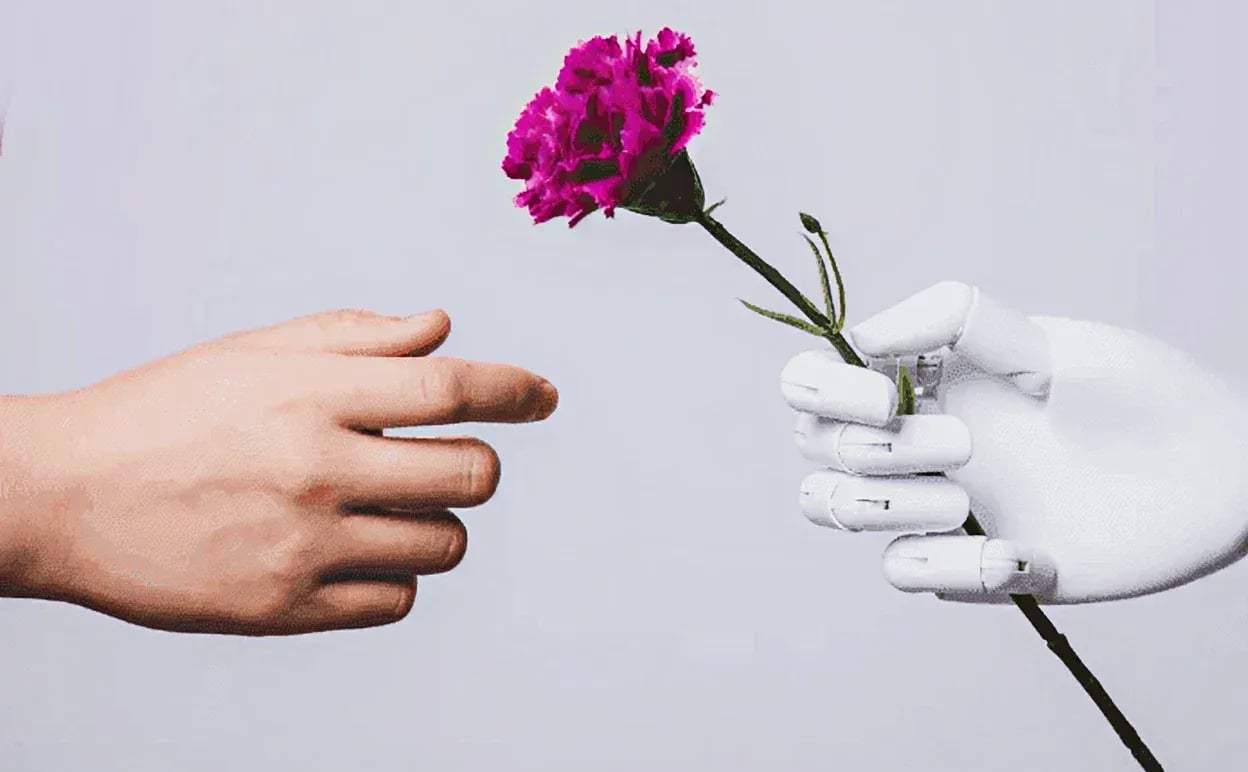
Through robotic arm movement paralyzed humans can reach and grasp again because of research with monkeys that spanned more than four decades.
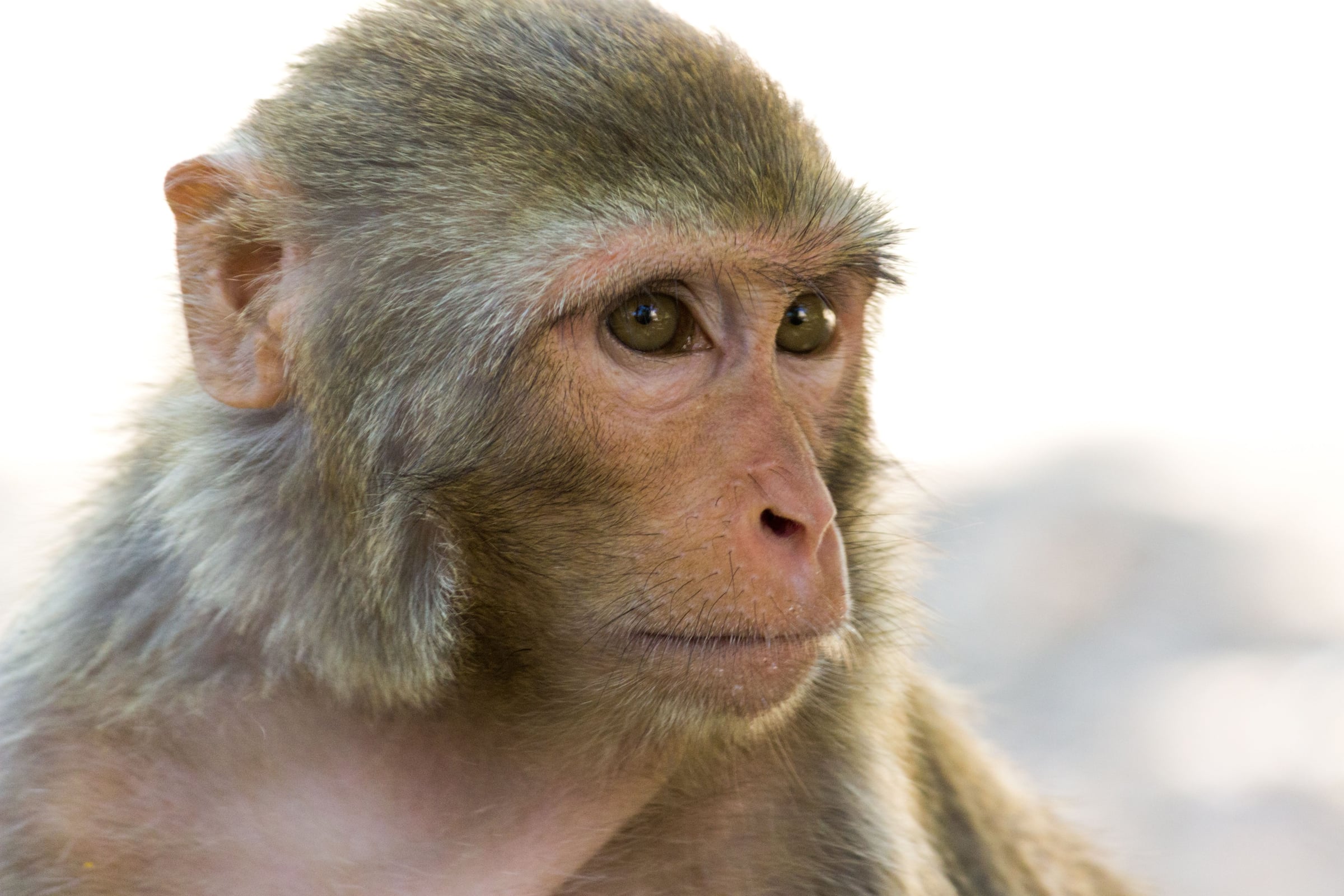
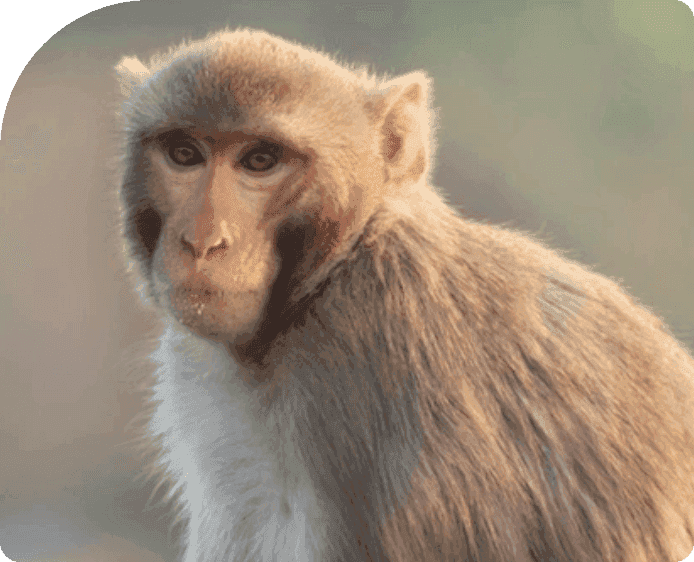
The reality of today’s artificial limb control largely depended on understanding the brains of monkeys, which have brain, arm and hand functions similar to those in humans.
Millions of people live with paralysis. One such severe impairment is the loss of ability to move the arms and hands to reach and grasp everyday objects such as a simple cup of coffee. The brain function that commands the arm to move and the hand to grasp is simply no longer connected to the muscles of the arm in these patients. They can try to move but nothing happens, and their inability to move could last for the rest of their lives without medical intervention.
Neuroscientists’ understanding of how the brain controls movement expanded starting in the 1960s through studies of monkeys’ brains and how they produced arm movements. Surgical methods involving tiny electrodes placed in a monkey’s brain while it was under anesthesia opened the door for scientists to study nonhuman primates’ brain activity. After recovery from the surgery, neuroscientists followed the activity of the neurons recorded by the electrodes.
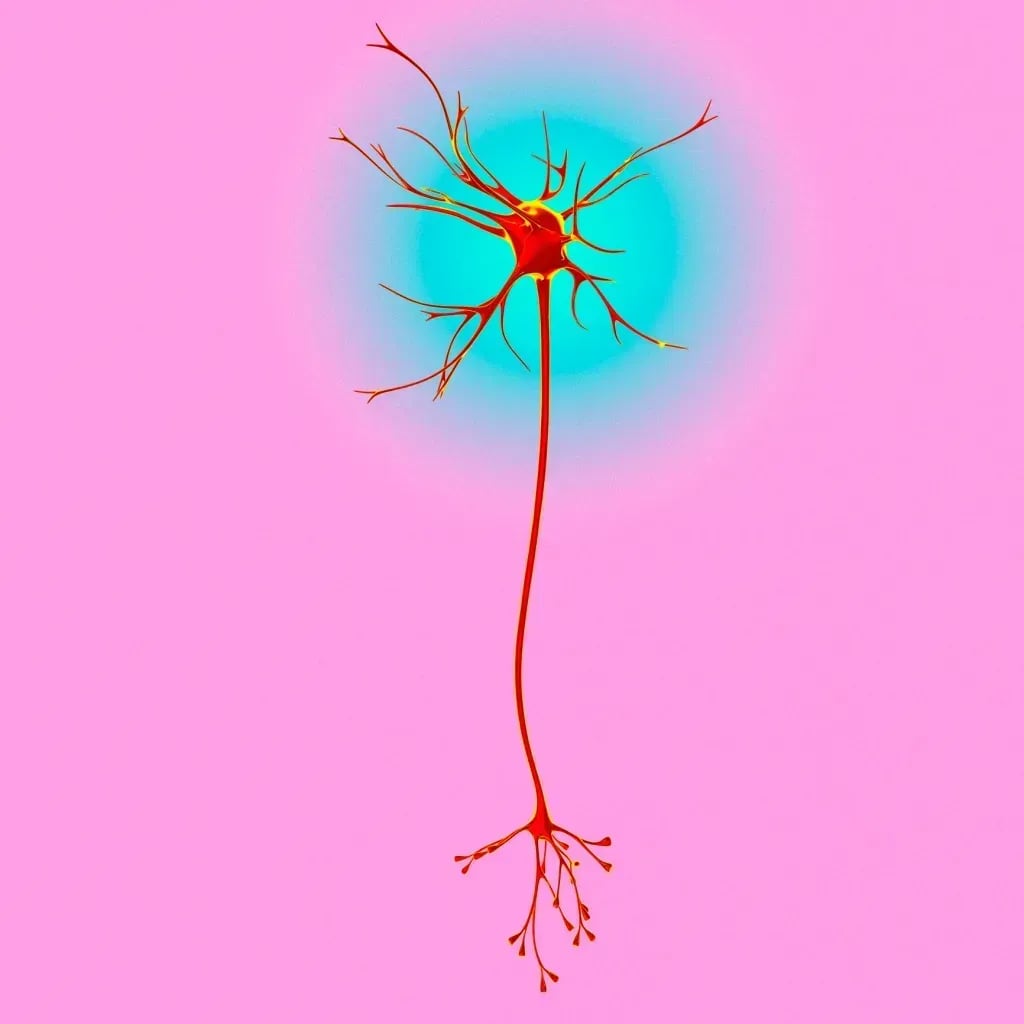
Neurons, or nerve cells, are fundamental components of nervous tissue and are responsible for communicating motor commands to muscles. (Image credit: MEHAU KULYK/SCIENCE PHOTO LIBRARY / Science Photo Library / Getty Images)
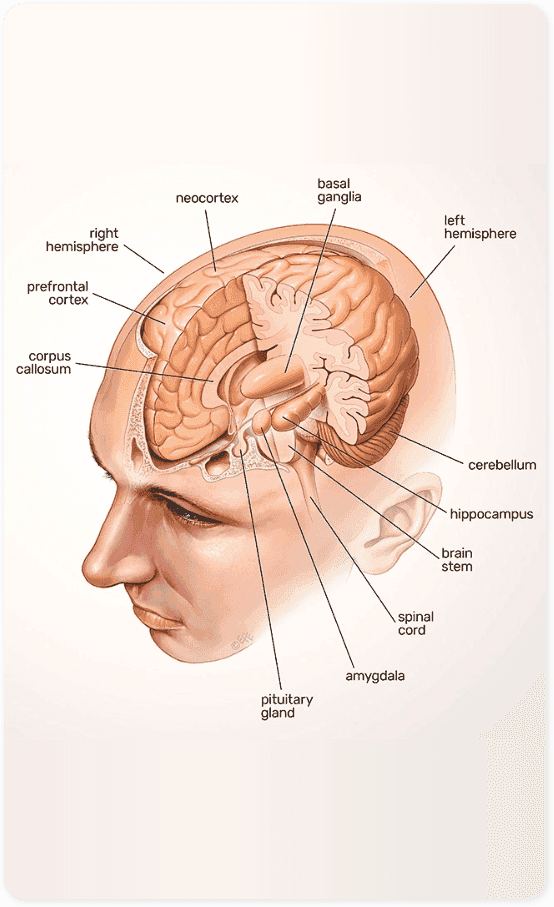
Researchers trained monkeys to make reaching and grasping movements in order to get a reward. Recording brain activity while a monkey reached and grasped objects gave scientists an essential understanding of how neurons in the monkey brain communicate to produce movements. Neurons active in the monkey brain during reaching were concentrated in an area of the cerebral cortex called the motor cortex. In addition, neurons spread out across extended areas of the cerebral cortex were also active, but less obviously so. Over a series of nonhuman primate trials stretching over many years, neuroscientists observed how neurons changed their activity before and during reaching and grasping. Scientists and engineers built computational models that translated neural activity to detailed arm and hand movement. They validated their computer models by showing that monkeys could operate a robotic arm and hand using neural activity recorded from their brains.
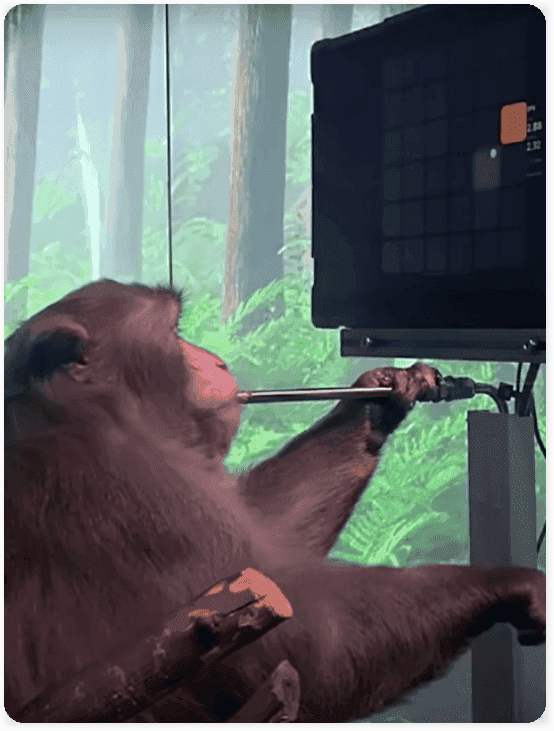
A macaque monkey, Pager, played “MindPong” with a brain implant, video footage neurotechnology company Neuralink released in 2021 shows. Neuralink is developing brain-interface technology consisting of a computer or smartphone, neural links implanted in the brain’s motor cortex and a neural decoder to help people with paralysis use a computer or smartphone simply by imagining the hand movements they would use to operate it. (Image credit: Screenshot / Neuralink / YouTube)
Scientists reasoned that since humans and monkeys share structural and functional similarities in the motor cortex area of the brain, the human brain’s neurons might act the same for picking up a cup of coffee as a monkey’s brain neurons do for picking up a banana. To test their model, neuroscientists recorded the activity of neurons using electrodes implanted in the motor cortex of paralyzed individuals under anesthesia, just as they had done with monkeys. (ALSO READ: From Rats to Monkeys to Humans: The Hope of Treating Anxiety and Depression)
The basic principles of the neural activity computer models developed with monkeys proved valid in humans. Paralyzed people could move a prosthetic arm in different directions thanks to neural activity recordings transmitted from the brain to the computer that controlled the prosthetic arm. These computer models are only an approximation of how neurons work to produce movement. Nonetheless, the paralyzed subjects could learn to subconsciously modify the way their motor cortical neurons communicate so that the computational models recognize their intended actions. This learning process, which is directly observed in neural recordings, is a rich area of research. Over time human subjects became very proficient at controlling a prosthetic arm and hand. They could move the arm through space, orient the wrist and shape the fingers. They controlled many joints of the artificial arm simultaneously and smoothly with near-natural coordination. This allowed the paralyzed individuals to perform a variety of tasks similar to those performed for daily living.
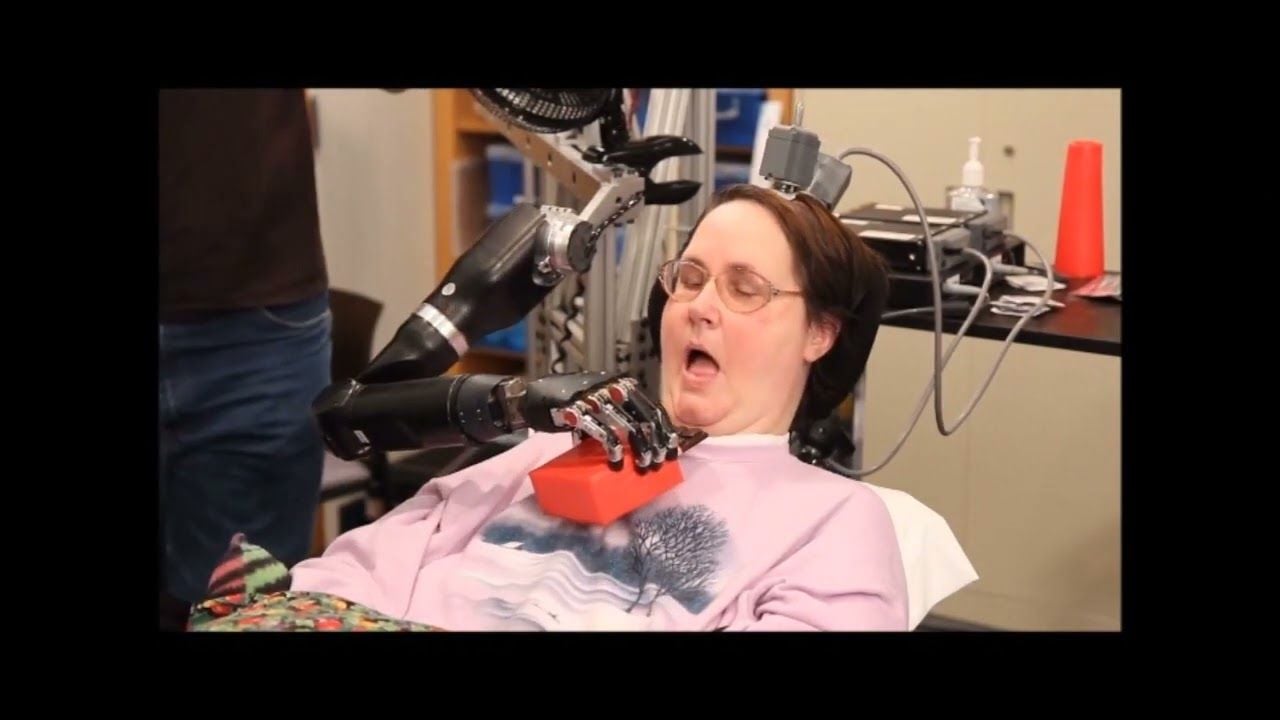
For those with paralysis, it is a thrilling experience to accomplish seemingly simple tasks like grasping a simple cup of coffee or a chocolate bar because they can once again interact with their environment, even if only in a limited way.
Further advances into paralysis and brain function continue to depend on humane and ethical investigations with nonhuman primates.
This article is based on:
Kennedy, S.D. and Schwartz, A.B. Distributed processing of movement signaling. Proceedings of the National Academy of Sciences, 2019, 116: 26266–26273
Consulting Scientist: Professor Andrew B. Schwartz, University of Pittsburgh, Pittsburgh, Pennsylvania, U.S.
Guiding Scientist: Robert H. Wurtz, Distinguished Investigator Emeritus, NIH, Bethesda, Maryland, U.S.
(Featured image credit: Kilito Chan / Moment / Getty Images)