How Primate Research Is Saving Children’s Eyesight
Early treatment in children with eyesight problems can prevent long-term visual defects and vision loss. Conditions such as nearsightedness, astigmatism and cataracts can lead to amblyopia, also called lazy eye.
Biomedical research has helped provide (and continues to provide!) answers and solutions for how to better care for amblyopia patients. Did you know amblyopia affects as many as 4% of children around the world? Animal research has improved treatment options for children with vision disorders associated with amblyopia.
“It’s called ‘lazy eye’ because the stronger eye works better. But people with amblyopia are not lazy, and they can’t control the way their eyes work,” according to the National Eye Institute. “Amblyopia starts in childhood, and it’s the most common cause of vision loss in kids.”
Children must have adequate visual experience in the first years of their lives if there is any hope for normal vision throughout the rest of their lives. While babies typically have poor vision at birth, their vision improves as they develop. For some infants there are failures in their visual development that lead to amblyopia. Amblyopia is characterized by a reduction in visual acuity or a disruption of coordination between the two eyes. These visual deficits affect many aspects of a child’s vision and can persist into adulthood. They can also have a significant impact on the child’s psychological development.
Unfortunately, there is no way to know exactly what newborns are seeing or how well they see. Therefore, it is difficult to determine vision problems at birth. Fortunately, researchers have been able to study the developing monkey visual system as it matures, which has led to great breakthroughs for humans.
Humans and rhesus macaque monkeys are both primates and share many similarities in the development of their visual systems after birth. Macaque monkeys’ color vision; depth, motion and form perceptions; and eye movements are identical to that of humans. Additionally, the anatomy of the macaque monkey’s brain is similar to a human’s brain. The macaque sees like humans do. So, scientists can directly apply observations made with macaques to humans.
Two neuroscientists, David Hubel and Torsten Wiesel, conducted landmark studies of the visual system and its development with rhesus macaque monkeys in the 1960s. Hubel and Wiesel won the Nobel Prize in Physiology or Medicine in 1981 for discoveries related to information processing in the visual system. Their research depended on work with both cats and monkeys.
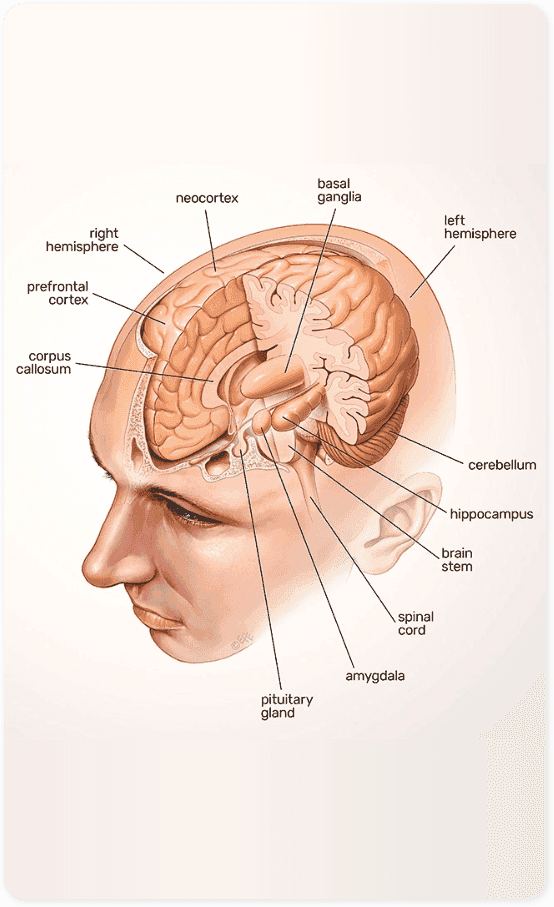
Most of Hubel and Wiesel’s work was centered on the visual cortex of the brain (Figure 1). One of their key critical discoveries was that each cell in the visual cortex receives information from both eyes (Figure 1A). This is the first point in the brain where visual information from both eyes is combined.
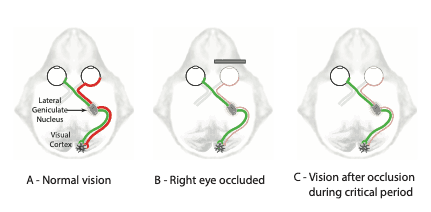
Figure 1. Effects in the monkey brain of altered early visual experience. A – normal vision. When both eyes see properly during early life, then the pathways to the visual cortex develop correctly. Both eyes exert strong influences on visual cortical cells. B- right eye occluded. When the right eye does not get normal vision, then the pathway to cells in the right visual cortex is weakened from the right eye. The visual cortical cells are dominated by the left eye. C – long term normal vision after occlusion during the critical period. When the right eye was occluded during the critical period, later normal vision in the right eye does not “repair” the pathway from the right eye. The left eye still dominates the inputs to cells in the right visual cortex. (Figure created by D. L. Robinson and J. Cavanaugh)
Hubel and Wiesel next showed how visual development might change these brain properties. Were these properties fixed permanently at birth? Might they change with different visual experiences? Their first approach to these questions was to cover one of the animal’s eyes (Figure 1B). They found the vast majority of neurons in the visual cortex were now only responsive to visual stimuli from the seeing eye, resulting in reprogramming of the cells in the visual cortex (Figure 1B). These studies with macaque monkeys showed that it is profoundly important for babies to get normal vision in both eyes as soon as they are born! If they have abnormal vision, unfortunately, their brains may not develop correctly.
In another set of studies scientists inactivated one of the muscles in one macaque monkey eye; the two eyes no longer moved together perfectly. Both eyes had good vision, but each eye got somewhat different images because the eyes were no longer aligned. In these animals, whose eyes were no longer perfectly coordinated, the visual stimuli that excited the visual cortical cells were now in different places of the visual field. Abnormal visual experience again changed how the macaque monkey’s visual brain functioned. These observations are critical for human babies, some of whom may not have normal eye movement control at birth. They can get lazy eye because their eyes do not move together perfectly, and that defect creates wide-ranging vision deficits.
Saving Children’s Eyesight
The studies with young macaque monkeys show that changes in visual experience lead to changes in the visual brain. For newborn human infants, this means that perfect visual experience at birth is essential for correct brain development.
In more recent studies researchers have examined the timing of the abnormal visual experience. Young macaque monkeys’ eyes were closed for varying lengths of time at different stages of development. They then had a period of normal visual experience. The cells within the visual cortex still had abnormal properties (Figure 1C) even after several years of normal visual experience, and the normal seeing eye continued controlling the cells in the visual cortex.
There is an early time period, called the “critical period,” when the animal must get normal vision or else suffer permanent visual brain impairment. For young monkeys this critical period is in the first couple years of life, but for human children it is in the first five to seven years of life. If a human infant does not have normal vision, their brain may not develop properly and future reading and muscular coordination, as well as perception of visual motion and object recognition, are damaged. Such children may never read well, and they may develop poorly in social and behavioral areas of life. Unfortunately, it can be too late to correct such problems if they are detected when the children are already in school.
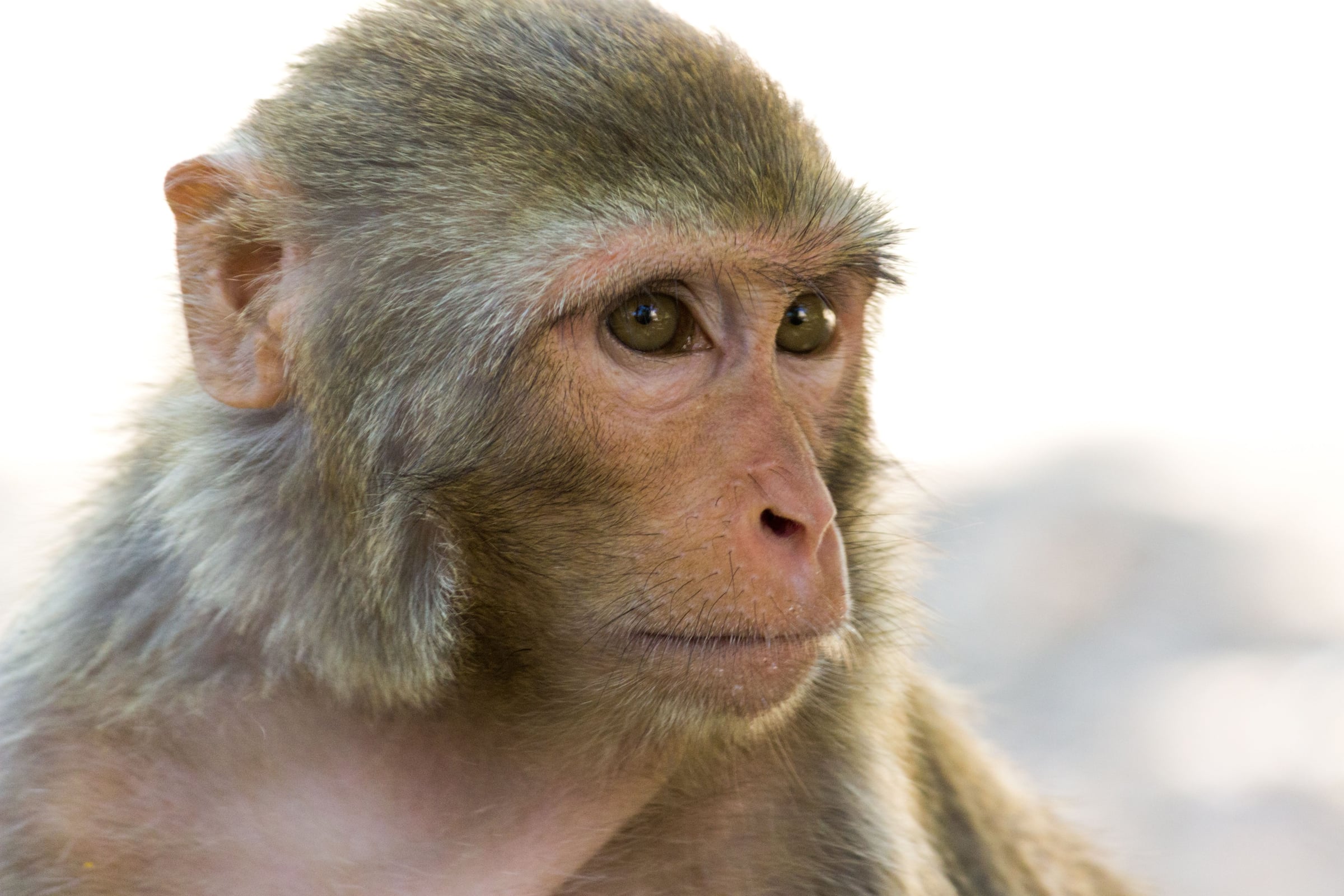
Image credit: SAURAV KUMAR BORUAH / iStock / Getty Images Plus
In the past doctors delayed lazy eye treatment until after the age of 2 for children with early visual problems. Treatments included covering the good eye in the hopes of forcing the bad eye to develop properly. Clinical treatments have significantly improved, and intervention starts much sooner, thanks to what was learned from the monkey studies described above. Newborns now commonly have surgery for conditions such as congenital cataracts soon after diagnosis. Thanks to animal research, we now know that the younger a child with amblyopia starts treatment, the better the result – yet another example how animal research is unlocking medical miracles.
Dr. Robinson is a retired federal scientist who studied brain processes that underlie vision and eye movements.
Reference:
Kiorpes, L. Understanding the development of amblyopia using macaque monkey models. Proceedings of the National Academy of Sciences, 2019, 116: 26217–26233.
Guiding Scientist:
Robert H. Wurtz, Distinguished Investigator Emeritus, NIH, Bethesda, Maryland, U.S.
(Feature image credit: Inti St Clair / Tetra images / Getty Images)